

London Calling
Today I am able to announce a new posting


Today I can speak about my new appointment. This is subject to the usual police checks and contract being signed off, etc. but hopefully I should be starting in September. Here is the statement I read in church this morning.
The archdeacon has asked me to make this announcement on Sunday 29th June. With the approval of Diocese of Southwark I have accepted the position of chaplain to the university of Greenwich and will therefore commence this appointment in the new academic year on Monday September 15th. My last service here will be Sunday 14th at Holy Trinity Salcombe. This is a newly created full-time post coordinating a team of part-time chaplains and volunteers. For the moment the job is largely weekdays, Monday to Friday. In the meanwhile the diocese are transferring the vicarage over to Frances as her curacy house as she applies for a suitable post. I will commute back on weekends and remain incognito while attending services that Frances leads in the Totnes area. I thank God for the wonderful years here that Frances, Nathaniel and Francesca have enjoyed here as it been an outstanding community to bring up a family. In these months of discerning and transition please keep us in your prayers as I will in mine. The Peace of Christ.
To be honest after seventeen years here this was a hard call. I didn’t sleep well thinking about making this announcement in church. I preached and then Olli Long a curate on placement with us led the Eucharist. Half way through the Eucharistic prayer I hoped he could stretch it out a bit as I was making the surprise announcement after Holy Communion and before the recessional hymn.
Last year my wife and I were approached by Canon John McGinley and Bishop Ric Thorpe with a view to forming some kind of resource church specialising in what is now dubbed the Quiet Revival. In these meetings with John and +Ric our instinctive feeling was towards the planting of a new congregation confidently sacramental - more icons than PowerPoints. We both felt that whatever was newly formed could have a university chaplaincy feel about it, that is great fellowship, good food, and interesting speakers. In terms of young adults curious to faith we calculate that the heatmap is at its most intense the nearer you get to the Thames. As visions and proposals go this has not been an easy one to sell to churches looking for a new incumbency. However when Greenwich chaplaincy came up this seemed the natural place to explore this and build up from there.
Once again I would like to thank you for your kind and generous support. Travelling back and forth to London every month for interviews, meetings and networking would not be possible without your kind help. As this job develops I will use this platform to make more announcements and explore further ideas. Please keep me in your prayers.
“Depart from Me, Lord, for I Am a Sinful Man”
A Reflection on Luke 5.1-11 for St. Peter’s Day
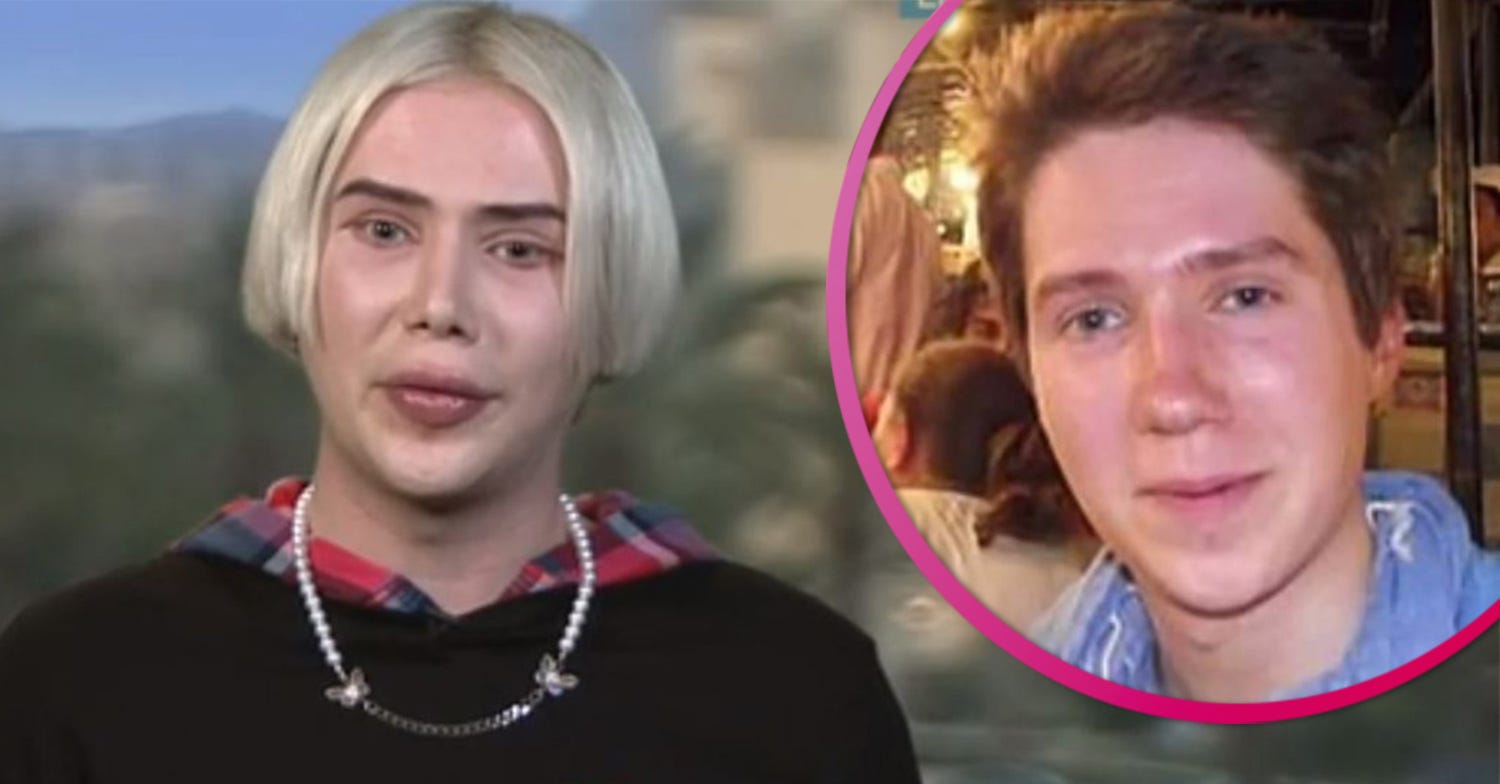
Picture a 31-year-old British influencer, Oli London, standing outside a London Catholic church in July 2021. He’s spent £175,000 on eighteen cosmetic surgeries—nose corrections, jawbone shaving, cheekbone reductions, and more—to reshape his identity. In July 2021 he’s on the This Morning Show with Philip Scofield sharing how he wants to become physically Korean, hence 18 operations.
The day before another major procedure, (to become a Korean woman) he’s snapping selfies for Instagram, chasing likes from strangers. The church door is open. Curiosity draws him inside, and what he finds changes everything.
Let me return to his story in a moment.
One day as Jesus was standing by the Lake of Gennesaret,[a] the people were crowding around him and listening to the word of God. 2 He saw at the water’s edge two boats, left there by the fishermen, who were washing their nets. 3 He got into one of the boats, the one belonging to Simon, and asked him to put out a little from shore. Then he sat down and taught the people from the boat. 4 When he had finished speaking, he said to Simon, “Put out into deep water, and let down the nets for a catch.”
5 Simon answered, “Master, we’ve worked hard all night and haven’t caught anything. But because you say so, I will let down the nets.”
6 When they had done so, they caught such a large number of fish that their nets began to break. 7 So they signaled their partners in the other boat to come and help them, and they came and filled both boats so full that they began to sink.
8 When Simon Peter saw this, he fell at Jesus’ knees and said, “Go away from me, Lord; I am a sinful man!” 9 For he and all his companions were astonished at the catch of fish they had taken, 10 and so were James and John, the sons of Zebedee, Simon’s partners.
Then Jesus said to Simon, “Don’t be afraid; from now on you will fish for people.” 11 So they pulled their boats up on shore, left everything and followed him.

In Luke 5.1-11, we meet another unlikely candidate for a divine encounter: Simon Peter, a rough-edged fisherman on the margins of society. As we reflect on this passage for St. Peter’s Day, we see a man who is raw, complex, and deeply human—just like us. Peter is no pious scholar. He’s mending nets, not mingling with the crowd listening to Jesus. Yet Jesus chooses him, stepping into his boat to address the masses, solving a practical problem of crowd control. This must have startled Peter. Rabbis don’t typically seek out gritty fishermen as allies, let alone disciples.
Peter and his crew have fished all night and caught nothing. Exhausted, frustrated, they’re ready to give up. Then Jesus, a rabbi who knows nothing about fishing, tells them to cast their nets—nets that need mending—into deep waters in broad daylight. To fishermen, this is absurd. Fish rise at night, not day, and trapping them requires patience and silence. Boats work together to enclose shoals, tip toeing on the waters to surprise the fish. Yet Peter, perhaps with a weary sigh, says, “If you say so, Lord.” There’s faith in those words, a flicker of trust in this unusual rabbi who dares to associate with him.
When the nets overflow with fish, threatening to break, Peter falls to his knees. “Depart from me, Lord, for I am a sinful man.” Those words send shivers down the spine. In the face of Christ’s holiness, Peter sees his own brokenness—his spiritual poverty. As Jesus said in the Sermon on the Mount, “Blessed are the poor in spirit” (Matthew 5:3). That awareness of our distance from God isn’t defeat; it’s the first step toward redemption.
We don’t know Peter’s specific failings—maybe he cut corners in business or neglected prayer—but the gospels aren’t biographies. They show us Peter as everyman, flawed yet open to grace. For me his confession resonates with the first steps of Alcoholics Anonymous: admitting powerlessness, believing in a higher power, and surrendering to God’s care. In a world grappling with addiction—whether to substances, social media, or approval—Peter’s story reminds us that behind every struggle is a deeper search for God. It was Carl Jung who said that behind every addiction there is quest for the divine.
Now, back to Oli London. He entered that church seeking a moody gothic Instagram backdrop, a quick hit of online affirmation. Instead, he sat in a pew, phone down, staring at a crucifix—a broken, tortured man on a cross. In that moment, Oli realized he wasn’t chasing likes but redemption. Like Peter, he saw his emptiness in the presence of the divine. An atheist when he walked in, he left a believer, canceling his next surgery and later returning to that church for baptism by full immersion.
Jesus didn’t call the “perfect” from the crowd of superfans. He called Peter—a man on the margins, exhausted, feeling like a failure. As Jesus himself said, “I have not come to call the righteous, but sinners” (Luke 5:32). Peter’s story, like Oli’s, shows us that Christ meets us at our lowest, in our brokenness, and calls us to follow.
When Pope Francis was asked who he is, he replied, “A sinner.” That’s where faith begins. As our world sees a revival of interest in Christianity, our parish must be a place where the broken, the empty, the searching find healing. This starts with each of us looking within, confessing our own need for grace. It means creating space—where those struggling with identity or addiction can encounter Christ’s love. I think at times this is where mainstream churches often fail. I worry that we are so busy with churchy stuff and being a religious club that the basic charism of attending to souls is lost. This is why I find AA so inspirational and instructive for us as churches.
Can we as Christians dare to echo Peter’s cry: “Depart from me, Lord, for I am a sinner,” or we too proud to admit our brokenness? Jesus will not reply with judgment, but with a call: “Follow me.”
I pray we, like Peter, may step out of the boat and into the miracle of God’s grace.